
Criminal Cases in Sonoma County Courts
The Superior Court of California, County of Sonoma holds the county's felony and misdemeanor case files. Criminal and traffic work is centered at the Hall of Justice, 600 Administration Drive in Santa Rosa. The court, not the sheriff, is the custodian for complaints, minute orders, pleas, rulings, judgments, and sentencing entries. That distinction matters when an arrest led to no charge or when a filed count later changed.
The court's main number is (707) 521-6500. A criminal matter may begin with a complaint filed by the Sonoma County District Attorney. From that point, the clerk assigns the case number and records each hearing and order. A booking page can answer whether someone is now in county custody, but the Sonoma County court docket is the place to trace what prosecutors filed and how the judge resolved it.
The court location directory shows where the criminal division sits.
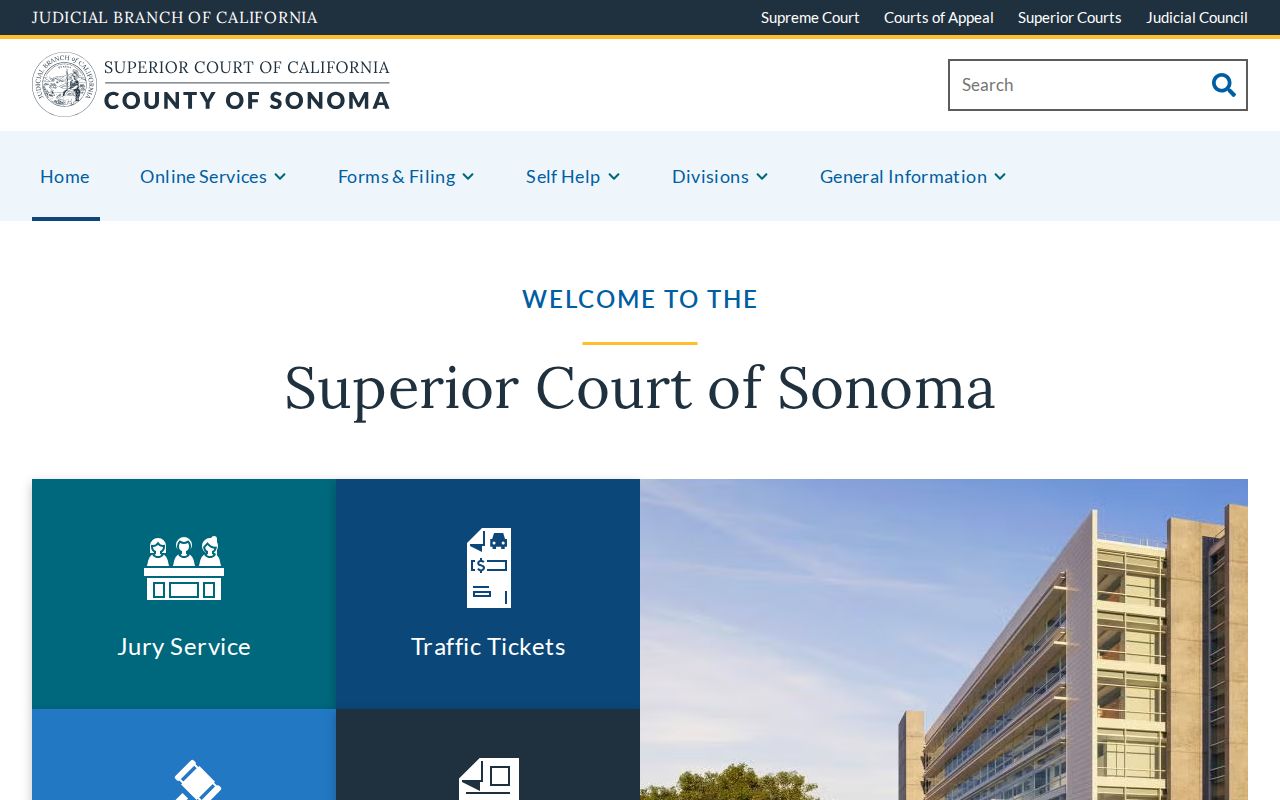
This court view anchors the search to the agency that maintains the original Sonoma County case file.
Sonoma County Odyssey Court Portal
Sonoma Superior Court moved from a decades-old database to the web-based Odyssey case management system. The court's Case Portal page is the official doorway. Begin with a case number when one is known. It is the best key because names can be shared, misspelled, or changed. A name search may still help, but compare the case type, filing date, and public docket details before treating a result as the intended Sonoma County criminal case.
Online access is a practical index, not a promise that every paper or confidential detail appears on screen. Some documents may be viewable or downloadable. Older files, certified records, and items withheld from remote display call for a clerk request. The court portal also does not replace the Sheriff's warrant search or jail tool. Those answer different questions about warrant status and present custody.
How to Search Case Records
Use the official portal first, then move to the clerk when the online record is incomplete. Sonoma County gives readers both channels. The following order preserves the case number and document names needed for a precise copy request.
- Open the Sonoma Superior Court Case Portal page and follow its Odyssey access instructions for criminal matters.
- Search by case number when available. Otherwise use the party name and compare public case details carefully.
- Open the docket and note the filing date, charge entries, hearing dates, disposition, and document titles.
- List the exact complaint, minute order, judgment, or other document needed instead of asking for an undefined full file.
- Submit CR-01 by mail or at the counter when Odyssey falls short or a certified copy is required.
The CR-01 form records the fields the clerk needs for a search or copy order.
| Field label | Type | Required | Notes |
|---|---|---|---|
| Case number | Text | Optional | Strongest identifier when known |
| Case or party name | Text | Yes if no case number | Used for the records search |
| Date of birth | Date/text | Conditional | Helps distinguish common names |
| Case type | Checkbox/text | Unspecified | Select criminal when applicable |
| Documents requested | Text/checkbox | Yes | Name the complaint, order, docket, or disposition |
| Certification | Checkbox | No | Add only when an official certified copy is needed |
When Sonoma County Odyssey Falls Short
Use the court's criminal record request instructions when a case predates useful portal coverage, a document is absent, or a certified copy is needed. Mail requests require a self-addressed stamped envelope and a check payable to Superior Court of California, County of Sonoma. The court says responses generally take one week to 10 days and are handled in the order received.
The CR-01 request should include the case number if known, or the party name and date of birth when the number is unknown. Add the case type, exact documents, number of copies, and requester contact information. If the final amount is uncertain, the form permits a check with a stated not-to-exceed limit. This is more useful than a broad request because it tells staff which Sonoma County criminal record to locate and price.
The Criminal Division page sets out record links and copy fees.
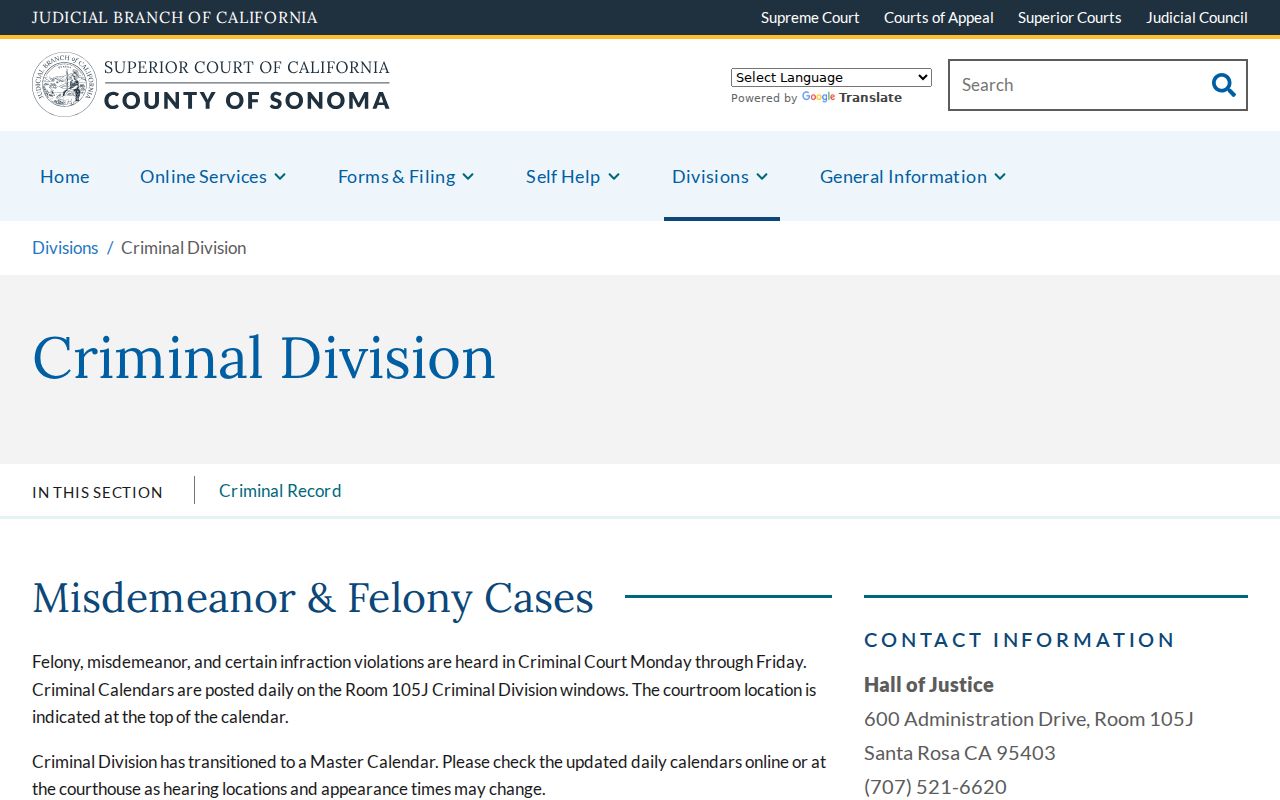
The division page confirms why portal review and formal copy requests serve different needs.
What the Sonoma County Case File Shows
A Sonoma County court file ties the accusation to what happened after filing. The public fields can show the prosecuting party, defendant role, charge descriptions, statute references, hearings, future dates, rulings, and final result. It may also show public documents and financial entries. Restricted personal data is not part of a sound identity match.
| Case number and court | Identifies the Sonoma County matter and the Superior Court holding it. |
|---|---|
| Charging document | Shows the complaint or later filed charges, which can differ from booking allegations. |
| Docket entries | Chronological minutes, filings, orders, pleas, and motions. |
| Hearing dates | Past proceedings and public future settings. |
| Disposition | Records a conviction, dismissal, plea, or other resolved outcome. |
| Sentence and financial terms | May list custody, supervision, fines, fees, or restitution when public. |
Sonoma examples include SCR and CR-style case numbers, but the exact number shown on the court record should control. A dismissal does not mean the file never existed. Later relief may appear as another order in the same docket.
Sonoma County Court Copy Fees
Copy choices have distinct legal uses and prices. A plain copy is simply a reproduction. Certification adds the clerk's formal attestation. Exemplification is a higher form of authentication and is not the routine choice for reading a case outcome. Ask the recipient what it needs before paying the higher Sonoma County court fee.
| Item | Fee |
|---|---|
| Plain copy | $0.50 per page |
| Certification | $40 per document plus copy fee |
| Exemplification | $50 plus copying or comparing fee |
| Records search | $15 per name for searches over 10 minutes |
| Off-site retrieval | $5 on CR-01 |
A targeted document list keeps the order clear. For instance, a disposition or sentencing minute may answer the question without paying for every page in a long Sonoma County file.
Stages of a Sonoma County Criminal Case
The court record begins when charges are filed, not merely when police make an arrest. At arraignment, the filed counts are stated and a plea is addressed. Pretrial entries can include motions, discovery issues, settlement settings, and changes to release terms. A plea or trial leads toward disposition. Sentencing then records the judgment and court-ordered consequences.
Case flow: Charges Filed › Arraignment › Pretrial › Plea or Trial › Disposition › Sentencing
This sequence explains why one early docket screen may not show the final Sonoma County result. Read later entries and the judgment before drawing a conclusion. The court file remains the key source for the filed outcome, while Sonoma County arrest history reflects the earlier arrest and booking event.
Case timing also affects what appears. A complaint may list the first filed counts, while a later amended pleading, plea, or dismissal changes the live posture. Minute entries can be brief, so pair them with the named order or judgment when precision matters. If the docket shows a future hearing, the case may still be pending and no final disposition exists. Sonoma County court staff can provide copies, but they do not interpret the legal effect of an entry for a requester. A party who needs advice about an active case should speak with counsel rather than infer strategy from the public index.
Sonoma County's New Hall of Justice
The California Judicial Branch has a project for a new Sonoma County Hall of Justice. The official facilities project page supplies the reliable project context. Readers should still use the Superior Court's current location and service pages for present filing, counter, and hearing details because a construction project page does not itself change where a record request goes.
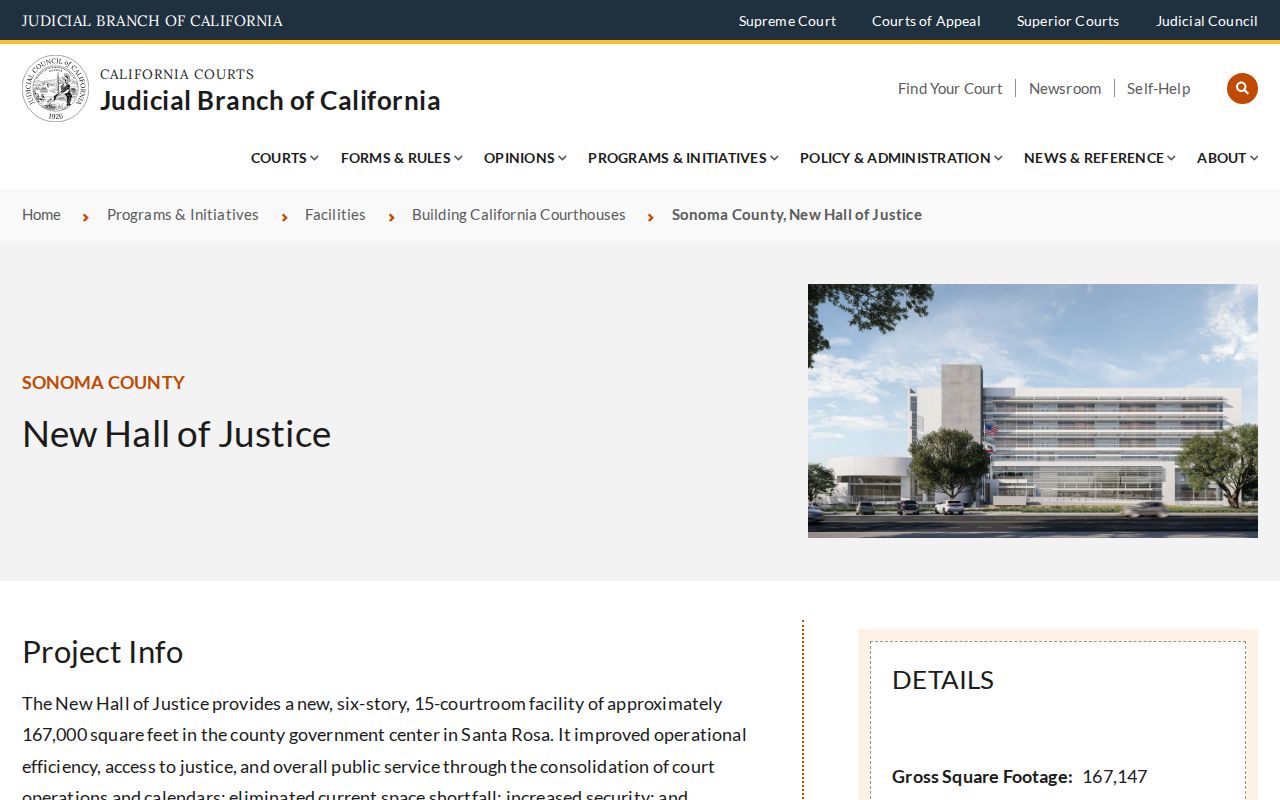
The project reflects a changing court facility, while custody of the Sonoma County criminal case file remains with the Superior Court clerk.
Sonoma County Case Access Restrictions
Public court access has firm limits. Juvenile information, victim details, confidential reports, sealed material, and personal identifiers may be withheld or redacted. California Rule of Court 2.503 governs remote electronic access, which can be narrower than lawful access at the courthouse. A missing online document therefore does not always mean that no public record exists.
The official electronic-access rule explains the statewide framework used by Sonoma County.
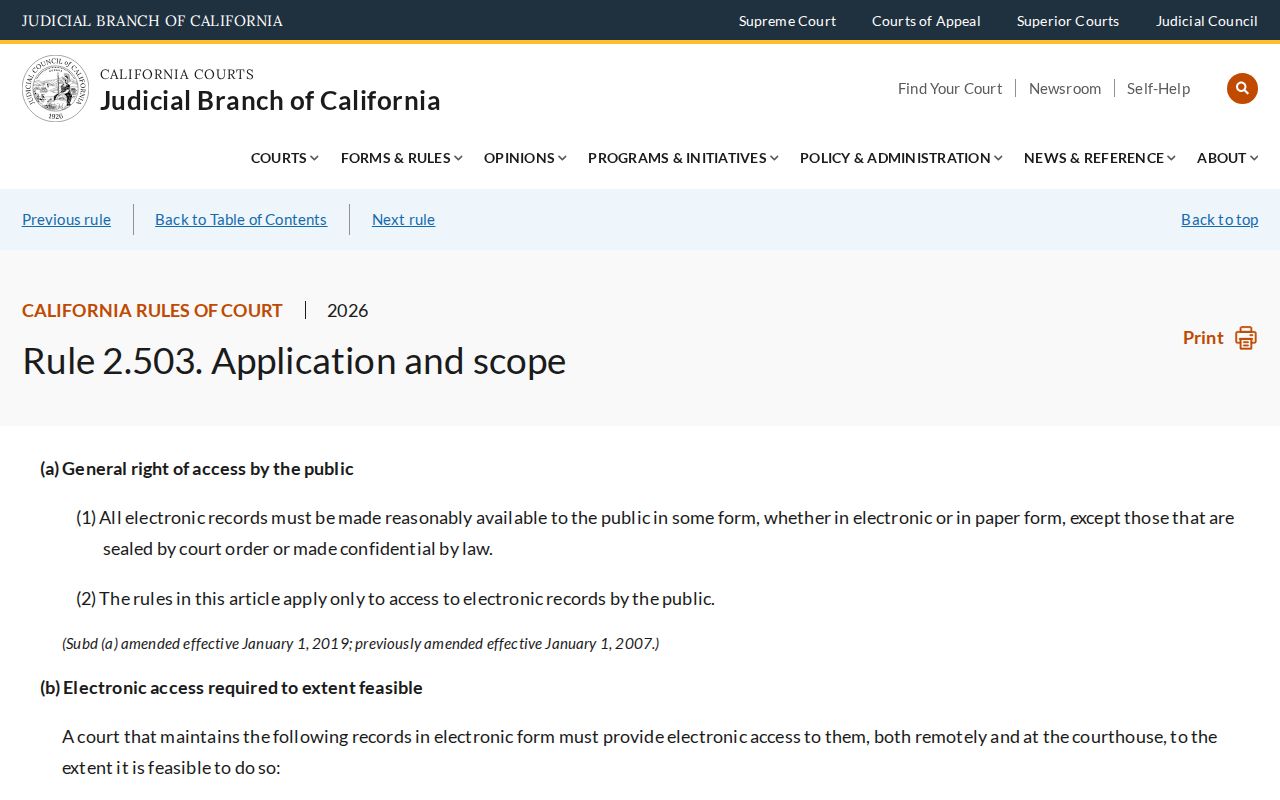
The rule helps explain why a clerk request may reveal public material that remote display does not provide.
When Sonoma County Records Are Sealed
Sealing is different from a portal outage or a search error. California Rule of Court 2.550 sets standards for sealed court records and protects material covered by a sealing order. Court staff cannot release sealed content merely because a requester knows the case number. Redaction can also leave the public part visible while hiding protected facts.
The California sealed-record rule states the governing court standard.
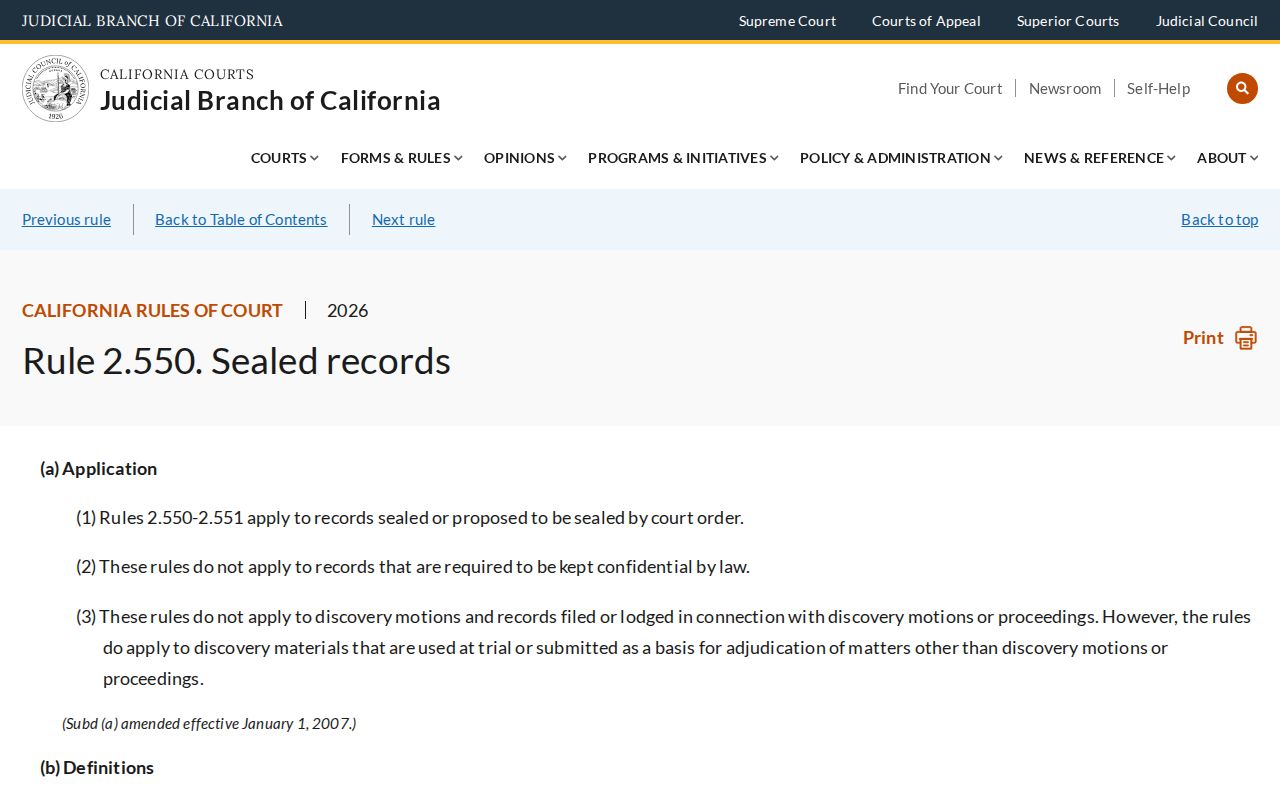
This distinction tells a searcher when to correct the search terms and when the court is legally barred from showing the requested material.
For a case that does not appear, verify spelling and the case number, then ask the criminal clerk whether an archived file request is appropriate. Do not use the DA's victim and witness lookup as a general public index. That limited tool requires a court, DA, or police report number and serves victims and witnesses under Marsy's Law.
A records request should avoid protected personal data that is not needed to identify the case. Give the clerk the known case number, party name, approximate filing period, and requested document. This lets the Sonoma County court distinguish an archive search from a sealed-record question. If the clerk confirms that a file is sealed, the public portal and ordinary copy process cannot override the order. If the issue is only an old off-site file, the CR-01 process and retrieval fee provide the documented path.